Top 1000 Google Keywords: 10 Best Blog Categories for SEO Traffic and Content Ideas
If you have ever searched for the Top 1000 Google keywords, you were probably hoping to find one massive list containing the most searched keywords on Google. Such a list sounds incredibly useful. Bloggers could use it to find content ideas, businesses could discover profitable search terms, and SEO professionals could identify opportunities to generate more organic traffic.
However, there is one important fact you need to understand:
There is no single, permanent list of the Top 1000 Google keywords that works for every website, country, language, and niche.
Google searches constantly change. What people search for depends on current events, seasons, location, language, technology, consumer behavior, and thousands of other factors.
Instead of chasing a universal keyword list, a better strategy is to understand the major keyword categories people search for and then find relevant opportunities within your niche.
In this guide, we will explore why a fixed Top 1000 Google keywords list does not exist, how modern keyword research works, and the 10 best blog categories for building an SEO-friendly website with long-term traffic potential.
Why There Is No Permanent Top 1000 Google Keywords List
Search behavior is constantly evolving.
Millions of searches happen every day for everything from weather forecasts and breaking news to product reviews, health questions, travel destinations, and educational resources.
Search demand can change quickly.
For example, sports-related searches may increase dramatically during a major tournament. Education keywords often become more popular during exam and admission seasons. Travel searches may rise before holidays, while shopping-related keywords can increase during major sales events.
Technology can also create entirely new keyword markets.
Terms related to artificial intelligence, AI tools, machine learning, automation, and generative AI have become increasingly important as technology has evolved.
This means a keyword with enormous search demand today may become less important in the future. At the same time, a relatively unknown keyword can suddenly attract millions of searches because of a new product, technology, event, or trend.
For bloggers, the goal should not simply be to find the biggest keywords. The goal is to identify relevant keywords with useful search intent that match your audience and content.
Google Keywords Depend on Country and Language
One major problem with any universal Top 1000 Google keywords list is geography.
People in different countries have different needs, interests, products, services, and search habits.
A popular search term in the United States may receive significantly less interest in India. Similarly, popular searches in the United Kingdom, Canada, Australia, Europe, Africa, or Southeast Asia can be very different.
Language creates another layer of complexity.
English keywords have their own search ecosystem, while Hindi, Spanish, Arabic, French, Portuguese, Japanese, and other languages have completely different search patterns.
Before researching keywords, you should therefore define your target market.
Are you targeting:
- A worldwide English-speaking audience?
- Readers in the United States?
- Users in India?
- A specific city or local market?
- People searching in a particular language?
The answer can completely change your keyword strategy.
Why Search Intent Is More Important Than Search Volume
A keyword can receive millions of searches and still be a poor target for your blog.
Consider broad terms such as:
YouTube
Weather
News
These terms may attract enormous search volumes, but ranking for them is extremely difficult. More importantly, people searching for these terms may simply want to visit a particular website or find a specific service.
This is known as navigational search intent.
Bloggers should usually focus on keywords where users are actively searching for information, comparisons, recommendations, solutions, or answers.
For example, instead of targeting:
laptop
You might target:
best laptop for college students
Instead of:
SEO
You could target:
how to do keyword research for a new blog
Instead of:
travel
You could create content around:
best places to visit in Rajasthan in winter
These more specific searches often reveal exactly what the user wants. That makes it easier to create genuinely helpful content.
Google SEO Is About Topics, Not Stuffing Keywords
Modern SEO requires much more than repeatedly placing keywords inside an article.
Search engines try to understand whether a page satisfies the user’s search intent and provides relevant, useful information about the topic.
For this reason, creating hundreds of unrelated articles simply because their keywords have high search volume is rarely a strong long-term strategy.
A better approach is to develop topical authority.
Suppose you create a personal finance blog. Instead of publishing random articles about technology, recipes, travel, finance, and gaming, you could build interconnected content around topics such as:
- Budgeting
- Saving money
- Credit cards
- Loans
- Investing
- Insurance
- Taxes
- Retirement planning
You can then create detailed articles targeting specific questions within each topic.
This creates a logical content structure that is easier for readers to navigate and gives search engines clearer context about what your website covers.
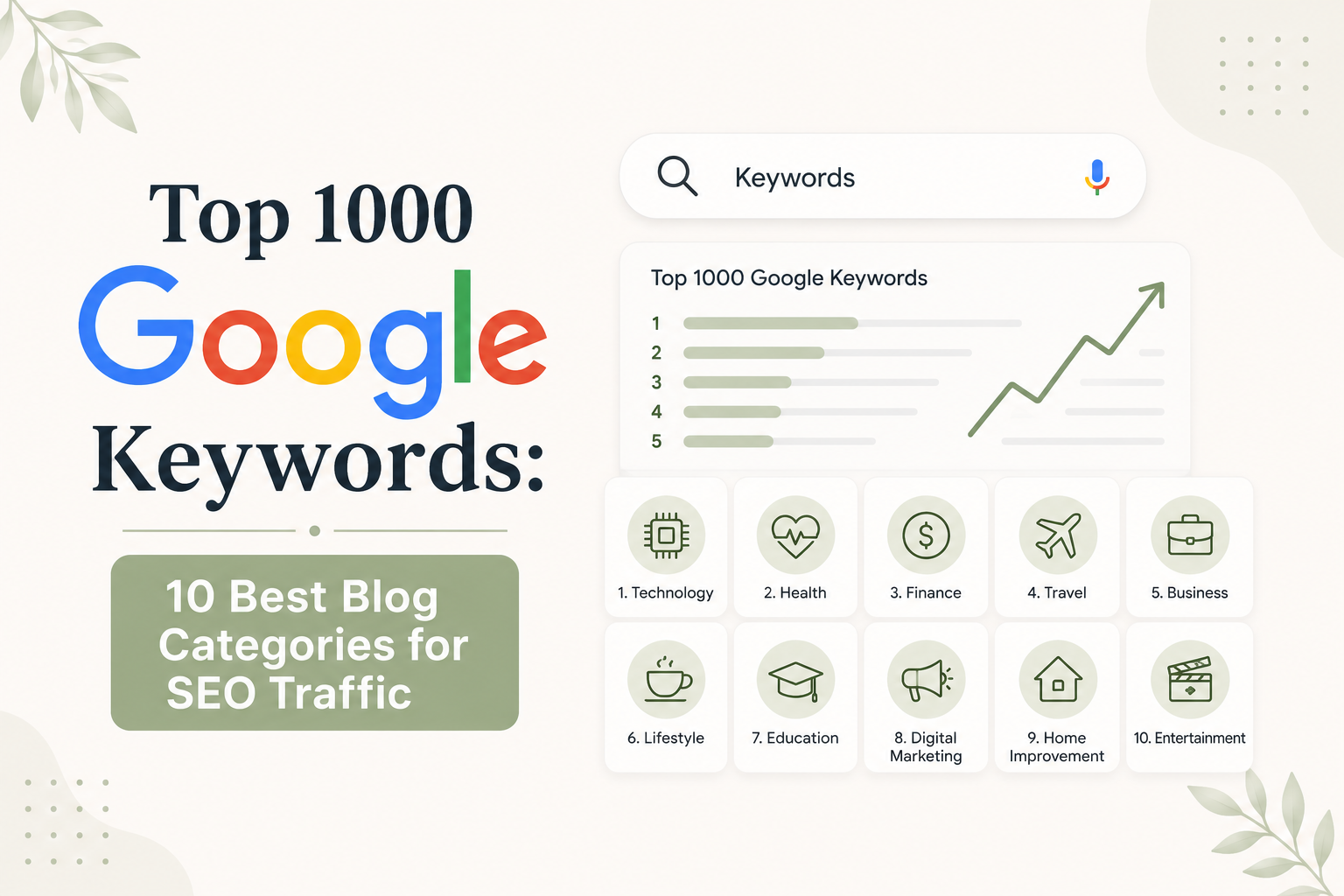
10 Best Blog Categories for SEO Traffic
If your real reason for searching for the Top 1000 Google keywords is to find a profitable or high-traffic blogging niche, choosing the right category is a much better starting point.
Here are 10 broad blog categories with significant potential for creating useful, search-focused content.
1. Technology and AI
Technology is one of the largest content categories on the internet because products and software constantly change.
Potential keyword topics include:
AI tools, artificial intelligence, software, mobile apps, laptops, computers, cloud computing, cybersecurity, machine learning, data science, web development, app development, coding, programming, automation
You can narrow the category further.
For example, an AI-focused website could publish tutorials about using AI tools for writing, marketing, productivity, education, design, or business.
A software blog could focus on comparisons and tutorials, such as:
“Best project management tools for small businesses”
“How to choose accounting software”
“Best free productivity apps for students”
Specific content usually gives you a clearer audience than trying to cover every technology topic.
2. Digital Marketing and SEO
Businesses, creators, freelancers, and website owners constantly look for ways to attract customers online.
That creates content opportunities around:
SEO, keyword research, content marketing, email marketing, social media marketing, Google Ads, online advertising, affiliate marketing, lead generation, conversion optimization, YouTube marketing
A strong digital marketing blog can focus on practical questions.
Instead of writing a generic article titled “SEO,” you could target specific problems such as:
“How to find low-competition keywords”
“SEO checklist for a new website”
“How to write SEO-friendly blog posts”
“How to improve organic traffic”
Detailed tutorials, case studies, comparisons, and beginner guides can work particularly well in this category.
3. Personal Finance and Money
Finance is another major search category because money affects almost everyone.
Common topics include:
Personal finance, budgeting, saving money, loans, credit cards, insurance, mortgages, interest rates, investing, stock markets, taxes, retirement planning
Finance content requires extra care because inaccurate information can have serious consequences. Articles should be thoroughly researched, transparent, and updated when financial rules or regulations change.
A finance website can also become more focused.
For example, you could build a blog specifically about budgeting for families, financial education for beginners, saving money, or understanding banking products.
The more clearly you define your audience, the easier it becomes to create relevant content.
4. Jobs, Careers, and Education
People regularly use Google to improve their careers and learn new skills.
Popular topics in this category include:
Jobs, remote jobs, work from home, freelance jobs, resumes, CVs, interview questions, salaries, internships, online courses, certifications, scholarships, study tips, exam preparation, skill development
This niche provides many opportunities for long-tail keywords.
For example:
“How to prepare for a job interview”
“Resume tips for fresh graduates”
“Best skills to learn for remote work”
“How to write a professional CV”
Educational content can also target students at different stages, from school and university to professional certifications and career development.
5. Health, Fitness, and Wellness
Health and fitness attract enormous search interest because people constantly look for information about improving their well-being.
Common topics include:
Health, fitness, workouts, nutrition, healthy food, yoga, exercise, gym training, home workouts, mental wellness, sleep, healthy habits
Medical and health-related content requires high standards of accuracy. Avoid making unsupported claims or presenting general online information as a replacement for professional medical advice.
A safer and more focused content strategy may concentrate on general wellness topics such as healthy routines, beginner fitness education, meal planning, exercise guides, and evidence-based lifestyle information.
6. Travel and Tourism
Travel offers thousands of potential keyword clusters based on destinations, seasons, activities, budgets, and traveler types.
Potential topics include:
Travel, tourism, holiday packages, flights, hotels, travel guides, visas, tourist attractions, things to do, itineraries, travel tips
Instead of competing for an extremely broad keyword such as “travel,” you can target specific questions.
Examples include:
“Best places to visit in Jaipur”
“Three-day Rajasthan travel itinerary”
“Best time to visit Goa”
“Things to do in Delhi with family”
Destination-specific content can attract highly targeted readers who are actively planning a trip.
7. Food and Recipes
Food is an evergreen content category because people will always search for recipes and cooking advice.
Potential topics include:
Recipes, healthy recipes, vegetarian food, home cooking, baking, meal planning, breakfast ideas, dinner recipes, traditional food
The key is specialization.
You might focus on quick recipes, regional Indian cuisine, vegetarian meals, healthy cooking, budget meals, baking, or recipes for beginners.
Recipe content can also target specific needs.
For example:
“Easy breakfast recipes for busy mornings”
“Vegetarian dinner ideas for families”
“Quick meals using simple ingredients”
Clear instructions and genuinely useful cooking advice can help differentiate your content.
8. Home, Lifestyle, and Personal Development
Lifestyle is a broad category that can cover everyday problems and personal goals.
Potential keyword areas include:
Home decor, interior design, furniture, home improvement, kitchen design, productivity, habits, self-improvement, motivation, time management, goal setting
Because this category is so broad, choosing a defined audience is important.
A productivity website, for example, could build content clusters around time management, planning, focus, workplace productivity, and digital tools.
A home improvement website could focus on renovation ideas, interior design, organization, maintenance, and DIY projects.
The goal is to create depth within a connected group of topics.
9. Business and Entrepreneurship
Entrepreneurship attracts readers who want to start, manage, or grow a business.
Popular keyword areas include:
Business ideas, startups, small businesses, online businesses, side hustles, ecommerce, business plans, marketing strategies, sales, lead generation
You can make this category more useful by targeting specific audiences.
For example:
“Small business ideas for beginners”
“How to create a simple business plan”
“Marketing ideas for local businesses”
“How to start an online business”
Content that solves practical business problems can attract readers with strong commercial and informational intent.
10. Product Reviews and Buying Guides
Before purchasing products, many consumers search Google for reviews, comparisons, recommendations, and buying advice.
Common keyword patterns include:
Best products, product reviews, product comparisons, deals, discounts, price comparisons, buying guides
Long-tail keywords are especially valuable in this category.
Examples include:
“Best laptops for students”
“Best office chairs for working from home”
“Product A vs Product B”
“Best budget smartphones”
High-quality review content should provide genuine value rather than simply recommending products. Explain who a product is suitable for, its limitations, important features, and what buyers should consider before making a decision.
How to Build a Keyword Strategy for Your Blog
Once you choose a category, avoid targeting hundreds of random keywords at once.
Start with one main niche and divide it into topic clusters.
For example, if your niche is digital marketing, your structure might include SEO, content marketing, email marketing, social media marketing, and paid advertising.
You can then research specific keywords within each cluster.
Prioritize keywords based on:
- Relevance: Does the keyword match your website’s main topic?
- Search intent: What does the user actually want?
- Competition: Can your website realistically compete?
- Traffic potential: Is there meaningful demand for the topic?
- Business value: Could the traffic support your website’s goals?
- Content quality: Can you create something genuinely better or more useful?
This approach is much more effective than downloading a massive keyword list and publishing disconnected articles.
Final Thoughts on the Top 1000 Google Keywords
The idea of finding a universal Top 1000 Google keywords list is attractive, but it does not reflect how search behavior works.
Keywords change over time. Search demand differs by country, language, season, niche, and user intent. Even a keyword with massive search volume may offer little practical value if it is too broad or irrelevant to your audience.
A smarter SEO strategy starts with choosing a clear niche. From there, identify important topic clusters, research specific search queries, understand user intent, and create genuinely useful content around those topics.
Technology and AI, digital marketing, finance, careers, education, health and wellness, travel, food, lifestyle, business, and product reviews all provide substantial opportunities for content creation. The best category for you, however, is the one where you can consistently provide accurate, useful, and distinctive information.
Instead of asking, “What are the Top 1000 Google keywords?” ask a more valuable question:
What are the best keywords for my niche, my audience, and the problems I can genuinely help them solve?
That question will lead you toward a stronger content strategy and more sustainable SEO growth.
Major Google Keyword Categories: A Representative Keyword List
The following is a representative list of popular Google keyword categories, organized by niche and general search intent. These are not necessarily the exact most-searched keywords or a definitive ranking by search volume. Instead, they provide a useful starting point for keyword research, SEO content planning, and discovering potential blog topics.
1. General & Everyday Searches
Google, YouTube, Facebook, Gmail, weather, news, translate, maps, calendar, drive
2. Technology Keywords
Software, apps, mobile phone, laptop, computer, AI tools, artificial intelligence, machine learning, cloud computing, cybersecurity, blockchain, data science, web development, app development, coding, programming
3. Internet & Digital Services
Email, website, domain, hosting, VPN, browser, search engine, online tools, download, free tools
4. Digital Marketing Keywords
SEO, search engine optimization, keyword research, content marketing, email marketing, social media marketing, Google Ads, Facebook Ads, YouTube marketing, affiliate marketing, influencer marketing, lead generation
5. Business & Entrepreneurship
Business ideas, startup, small business, online business, passive income, side hustle, make money online, dropshipping, ecommerce, business plan, marketing strategy, sales funnel
6. Finance & Money
Bank, loan, credit card, insurance, mortgage, interest rate, investment, stock market, cryptocurrency, Bitcoin, tax, budgeting, saving money, personal finance
7. Jobs & Careers
Jobs, work from home, remote jobs, freelance jobs, career growth, resume, CV, interview questions, salary, job search, internship
8. Education & Learning
Online courses, degree, certification, exam preparation, study tips, e-learning, school, college, university, scholarship, training, skill development
9. Health & Fitness
Health, fitness, workout, weight loss, diet plan, nutrition, mental health, yoga, exercise, gym, home workout, healthy food
10. Medical Keywords
Symptoms, treatment, medicine, doctor, hospital, clinic, disease, diagnosis, healthcare, medical test
11. Beauty & Personal Care
Beauty tips, skincare, hair care, makeup, cosmetics, anti-aging, acne treatment, natural beauty, personal hygiene
12. Lifestyle Keywords
Lifestyle, daily routine, habits, self-improvement, motivation, productivity, time management, goal setting, life tips
13. Fashion & Clothing
Fashion, clothing, shoes, bags, accessories, men’s fashion, women’s fashion, kids’ clothing, fashion trends, outfits
14. Shopping & Product Keywords
Buy online, best products, product reviews, cheap deals, discounts, offers, price comparison, Amazon products, Flipkart deals
15. Travel & Tourism
Travel, tourism, holiday packages, flight booking, hotel booking, travel guide, visa, tourist places, things to do, travel tips
16. Food & Cooking
Food, recipes, healthy recipes, vegetarian food, non-vegetarian recipes, fast food, home cooking, baking, meal planning
17. Entertainment
Movies, web series, TV shows, Netflix, Amazon Prime, music, songs, lyrics, celebrity news, movie trailers
18. Gaming
Games, online games, mobile games, PC games, console games, free games, game downloads, gaming tips
19. Sports
Sports news, cricket, football, basketball, tennis, live scores, match highlights, player stats
20. Real Estate
Real estate, property, houses for sale, rent, apartments, commercial property, land, property investment
21. Legal Keywords
Law, legal advice, lawyer, attorney, court, case, legal rights, contracts
22. Automotive
Cars, bikes, electric vehicles, car prices, car reviews, used cars, vehicle insurance, car maintenance
23. Home & Living
Home decor, interior design, furniture, home improvement, kitchen design, bedroom ideas, living room decor
24. Parenting & Family
Parenting, baby care, pregnancy, child education, family health, kids’ activities
25. Local & Service Searches
Near me, best service, repair service, plumber, electrician, carpenter, cleaning service
How to Use These Google Keyword Categories
Do not treat this list as a collection of keywords that should all be added to one website or blog post. Instead, use the categories to identify a niche that matches your website and audience.
For example, a technology blog might start with the broad topic “AI tools” and expand it into more specific searches such as “best AI tools for students,” “free AI tools for content creation,” or “AI productivity tools for small businesses.”
Similarly, a travel website could turn the broad keyword “travel guide” into location-specific topics such as “Jaipur travel guide,” “best places to visit in Rajasthan,” or “India travel guide for first-time visitors.”
This topic-cluster approach helps you target more specific search intent while building deeper coverage around your chosen niche. Before creating content, check current search demand, keyword difficulty, competition, location, and user intent using reliable keyword research tools.
The most valuable keywords for your website are not always those with the highest search volume. The best opportunities are usually keywords that closely match your audience’s needs and allow you to provide a genuinely useful answer.
Explore 1,000+ SEO Keywords by Category
Looking for keyword ideas for your next blog post? Explore our collection of 1,000+ SEO keyword ideas, carefully organized into popular categories so you can quickly find relevant topics for your website.
Choose a category below, explore the keyword ideas, and copy the keywords you want to use for your SEO research and content planning.
💰 Personal Finance Keywords
Discover keyword ideas related to personal finance, budgeting, saving money, investing, credit cards, debt management, retirement planning, passive income, taxes, and wealth building.
[Copy Personal Finance Keywords]
❤️ Health & Wellness Keywords
Explore keywords covering healthy living, fitness, nutrition, workouts, mental wellness, sleep, stress management, mindfulness, yoga, healthy habits, and general well-being.
[Copy Health & Wellness Keywords]
💻 Technology & Gadgets Keywords
Find keyword ideas for technology, AI tools, smartphones, laptops, gadgets, software, apps, cybersecurity, smart devices, gaming technology, and product reviews.
[Copy Technology & Gadgets Keywords]
🍳 Food & Recipes Keywords
Browse keywords for recipes, home cooking, healthy meals, vegetarian food, baking, desserts, meal preparation, quick recipes, international cuisine, and cooking tips.
[Copy Food & Recipes Keywords]
✈️ Travel Keywords
Explore keyword ideas covering travel guides, destinations, budget travel, hotels, flights, itineraries, solo travel, family vacations, travel tips, and adventure tourism.
[Copy Travel Keywords]
🌿 Lifestyle Keywords
Discover keywords related to lifestyle, productivity, self-improvement, personal growth, daily routines, mindfulness, motivation, work-life balance, and intentional living.
[Copy Lifestyle Keywords]
👨👩👧 Parenting & Family Keywords
Find keyword ideas for parenting, baby care, child development, positive parenting, family activities, education, family relationships, parenting challenges, and healthy family routines.
[Copy Parenting & Family Keywords]
🚀 Business & Entrepreneurship Keywords
Explore keywords covering startups, small businesses, online businesses, entrepreneurship, marketing, sales, business planning, branding, lead generation, and business growth.
[Copy Business & Entrepreneurship Keywords]
🏠 DIY & Home Improvement Keywords
Browse keywords related to DIY projects, home renovation, interior design, home decor, organization, repairs, gardening, furniture, affordable upgrades, and creative home projects.
[Copy DIY & Home Improvement Keywords]
🎓 Education & Career Keywords
Discover keywords covering education, online learning, careers, job searches, resumes, interviews, professional development, remote work, productivity, certifications, and skill development.
[Copy Education & Career Keywords]
🚀 Get All 1,000+ Keywords
Save time on brainstorming and start exploring keyword opportunities for your niche. Browse all categories above to discover 1,000+ keyword ideas for SEO, blogging, content planning, and topic research.
Choose Your Category. Copy Your Keywords. Start Creating.
Use the Copy Keywords button for your preferred category to quickly copy the complete keyword list. You can then paste the keywords into your favorite keyword research tool to analyze search volume, competition, keyword difficulty, trends, and search intent.
Important: These keywords are provided as topic and keyword ideas. They are not ranked as the 1,000 most-searched Google keywords and do not guarantee search rankings. Always perform current keyword research before creating SEO content.
1,000+ SEO Keywords for Blogs & Content Ideas
Explore high-interest keyword ideas organized into 10 popular categories. Search, copy, or download keywords for your SEO research and content planning.
Personal Finance Keywords
Budgeting, investing, saving, credit, debt, retirement and wealth-building keyword ideas.
Health & Wellness Keywords
Keyword ideas covering healthy living, fitness, nutrition, mindfulness and general wellness.
Technology & Gadgets Keywords
Technology, AI, smartphones, laptops, software, apps and consumer electronics keyword ideas.
Food & Recipes Keywords
Recipes, cooking, healthy meals, baking and meal-planning keyword ideas.
Travel Keywords
Travel planning, destinations, hotels, flights, itineraries and vacation keyword ideas.
Lifestyle Keywords
Personal growth, productivity, routines, mindfulness and better-living keyword ideas.
Parenting & Family Keywords
Parenting, child development, family relationships and healthy-routine keyword ideas.
Business & Entrepreneurship Keywords
Startups, online business, marketing, branding, sales and growth keyword ideas.
DIY & Home Improvement Keywords
DIY projects, renovations, home decor, organization and repair keyword ideas.
Education & Career Keywords
Learning, careers, jobs, interviews, professional development and skill-building keywords.
Find Your Next SEO Content Idea
Copy or download your preferred keyword category, then analyze the keywords using current search-volume, competition, difficulty and search-intent data before creating content.
SEO Note: This library contains keyword and topic ideas. It should not be interpreted as a verified ranking of the 1,000 most-searched Google keywords. Search volume, competition and trends change over time and vary by country, language and search intent.
Top 1000 Google Keywords FAQs
Find quick answers about popular Google keywords, keyword research, SEO strategy, search volume, competition, and using keyword lists to plan better content.
What are the Top 1000 Google keywords? +
The term "Top 1000 Google keywords" generally refers to a large collection of popular search terms and keyword ideas across categories such as finance, health, technology, food, travel, lifestyle, parenting, business, home improvement, education, and careers. There is no single permanent Top 1000 list because search trends and volumes change over time.
Are these really the 1,000 most searched keywords on Google? +
Not necessarily. A keyword collection should be treated as a source of topic and content ideas unless it is backed by current search-volume data. The most searched terms can vary by country, language, device, season, current events, and time period.
How can I use this keyword list for SEO? +
Start by choosing keywords that closely match your website's niche. Research their search volume, competition, keyword difficulty, and search intent. You can then group related terms into topic clusters and create useful content that answers what people are actually searching for.
Can I copy and use these keywords on my website? +
You can use the keyword ideas for research and content planning. However, simply adding many keywords to a page will not improve rankings. Each keyword should be used naturally and only when it is relevant to the topic and helpful to the reader.
Which keyword category is best for blogging? +
The best category depends on your knowledge, audience, competition, and business goals. Popular categories include personal finance, health and wellness, technology, food, travel, lifestyle, parenting, business, DIY and home improvement, education, and careers. Choose a niche where you can consistently publish accurate and useful content.
Should I target high-volume or low-competition keywords? +
A balanced strategy is usually more practical. Newer websites may benefit from targeting specific, relevant long-tail keywords with realistic competition. As your website builds topical authority, you can gradually target broader and more competitive search terms.
What are long-tail keywords? +
Long-tail keywords are more specific search queries that usually reveal clearer user intent. For example, instead of targeting the broad term "laptop," you might research "best budget laptop for college students." Specific queries can help you create content for a more clearly defined audience.
How many keywords should I target in one blog post? +
There is no fixed number. Focus primarily on one main topic and its search intent, then naturally cover closely related terms and questions where they improve the article. Avoid forcing unrelated keywords into the content simply to increase keyword count.
How do I choose the best keywords for my website? +
Look for keywords that are highly relevant to your niche and audience. Consider search intent, current search demand, competition, traffic potential, and business value. The strongest opportunities are often terms where you can provide a more useful, accurate, or comprehensive answer than existing content.
Do Google keyword rankings and search volumes change? +
Yes. Keyword popularity changes because of trends, seasons, news, technology, consumer behavior, and regional differences. Search volume should therefore be checked with current keyword research data before making important SEO or content decisions.
Explore 1,000+ SEO Keyword Ideas
Browse keywords by category, copy your preferred list, and start researching new opportunities for your SEO and content strategy.